
ENGINEERING INSIGHTS
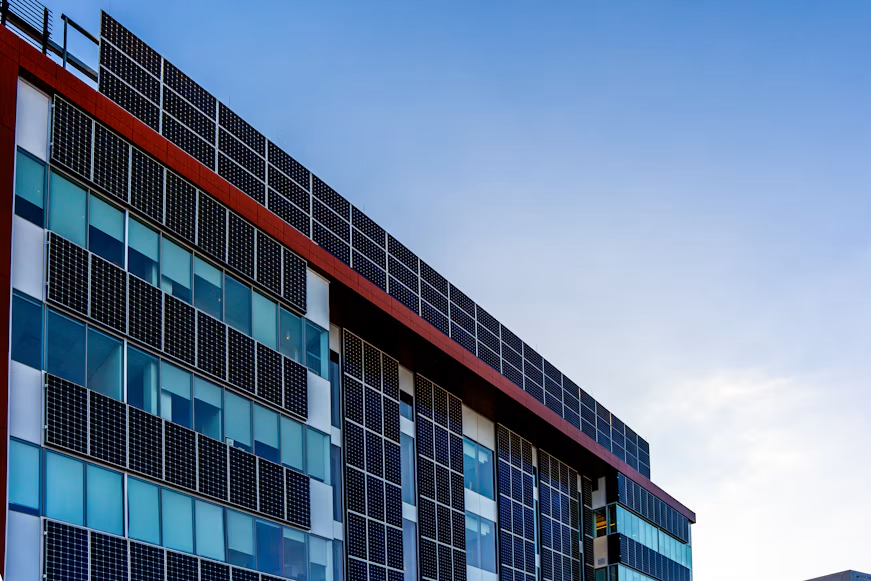
Most solar panels sit on top of a building. BIPV panels become part of it. The BIPV solution in Bangladesh is still a small niche today. But it's starting to draw real interest from architects, developers, and building owners. They want solar power without bolting extra hardware onto a finished design. This guide covers what BIPV actually is and how it differs from standard rooftop solar. It also covers what it costs, and where it stands in Bangladesh right now.
BIPV stands for building-integrated photovoltaics. In plain terms, the solar cells replace a normal building part instead of sitting on top of it. A BIPV wall panel does the job of wall cladding while also making power. A BIPV skylight does the job of glass while also making power. The panel isn't an add-on. It's part of the structure.
This differs from two other setups worth knowing:
Standard roof solar, or BAPV. Builders bolt panels on top of an existing roof. The roof and the panels each do a separate job.
Big solar farm systems. Panels sit on open land, built to feed the grid rather than to double as part of any building.
The core split is simple. Builders add BAPV to a building. BIPV becomes the building. That one gap changes how you plan, design, and pay for the system. A BIPV panel swaps in for a material cost you'd have paid anyway. It's not just an added energy cost stacked on top of the build.
BIPV isn't one fixed product. It covers several building parts, and each one fits different jobs.
Walls and outer panels. Panels form the outer skin of a building. This suits tall business buildings where roof space is small next to wall area.
Skylights and glass. See-through panels let some light through while still making power. These often go in as atrium roofs or window parts.
Shade structures. Fixed sunshades or louvers double as solar panels. They cut heat gain and glare while also making power.
Roofing and tiles. Panels shaped like normal roof tiles or sheets swap in for the roof surface directly. This is common on homes and low-rise jobs.
For a country as sun-hit as Bangladesh, shade structures deserve real note. They solve two problems at once. They cut the cooling load a building would carry, and they make power at the same time.
Bangladesh has real solar plus points on its side. Average solar radiation runs between 4 and 6.5 kWh per square meter a day across most of the country. That's among the strongest in South Asia. Yet BIPV itself stays rare here. It's worth knowing why, since the reasons point to where the real chance sits.
Bangladesh has no state rule that speaks to BIPV by name. Study on the topic has flagged this gap direct. There's no law that covers this build method. There's also little local study to guide architects or builders who want to try it. Standard roof solar has moved ahead of BIPV in rule terms. That's not because BIPV falls short. It's because nobody has built a frame around it yet.
Bangladesh's wider solar rules have moved fast in the last two years, even with no BIPV-specific rule in place. New buildings with roof space over 92.2 square meters must now put in net-metered solar. This is a must for getting a new grid link. Net metering itself got better too. The 2025 fix raised the share of set load that can be net-metered from 70 percent to 100 percent. It also opened the plan to single-phase users for the first time.
None of these rules name BIPV. But they don't need to. A BIPV wall or skylight system that ties into the grid fits under the same net metering frame as a standard roof system. This means the rule path already exists, even with no set BIPV rules yet.
A study of a 12.5 kWp BIPV wall system installed on a Dhaka business building found real results. It could make roughly 22,600 kWh of power a year. It also cut about 15 tons of carbon a year. That's a small system next to a big solar farm. But it's a real, logged Bangladeshi case that shows the tech works here, not just on paper.
BIPV carries a different cost logic than standard roof solar. It's easy to weigh the two unfairly if you only look at the panel price.
A standard roof panel is pure added cost. You pay for the panel on top of whatever roof stuff was already there. A BIPV panel swaps in for a part you'd have bought anyway, whether that's wall cladding, roof tiles, or glass. Weigh the panel cost against the build part it replaces, and the true added cost of going solar drops. Sometimes it drops a lot compared to a flat price check of BIPV against BAPV per watt.
That said, BIPV parts alone usually cost more per watt than standard roof panels. Anyone pricing a BIPV solution in Bangladesh should expect that upfront gap. They're built to double as a build part. They often need custom sizing, mount gear, and setup skill that a standard panel installer may lack. The call, in real terms, comes down to whether a project's design already calls for high-end wall or glass gear. If it does, BIPV can make real money sense. If a project just wants the cheapest way to add solar to a done building, standard roof solar stays the simpler path. It's usually the cheaper one too.
To put a rough number on it, global cost data suggests BIPV parts can run well above the price of a bolt-on panel per watt. Sometimes the gap is wide, when priced as a like-for-like solar product alone. But that check misses the point. Once you subtract the cost of the wall cladding, glass, or roof gear the panel replaces, the true extra cost shrinks a lot. In some designs it can vanish entirely. This is why a BIPV quote should always weigh against a full building budget. A solar gear budget alone isn't a fair test.
BIPV isn't the right fit for every job. Being clear about that up front saves wasted design time.
New business builds with a design-first brief. Office towers, HQ buildings, and public buildings where the wall design is already a big spend line are the strongest fit. BIPV folds into a cost that's already being spent.
Buildings with tight roof space next to their footprint. Tall buildings with a small roof but a large wall area gain little from roof solar alone. Wall-built BIPV opens up power-making room that a roof-only path can't reach.
Projects going for green build marks. BIPV's double job as both structure and power source often scores well under green rating plans. These plans reward power made on-site as part of the building skin itself.
Fix-up jobs already swapping wall or roof stuff. If a building's cladding or roof needs a swap regardless of solar plans, that's the point where BIPV's cost logic works best. The material swap was happening either way.
On the other hand, a factory or store hall usually wants the cheapest way to cut its power bill. A BIPV solution in Bangladesh rarely fits that goal as well as standard roof solar does. BIPV's gains are design and material-cost driven first, and pure money driven second.
The steps to build a BIPV solution in Bangladesh share some ground with standard solar. But BIPV adds real design and engineering work that a roof-only job doesn't need.
Unlike roof solar, which builders can often add after a building is planned, BIPV works best when it's part of the design from the start. Bolting BIPV onto a done design is doable. It usually costs more and proves harder than folding it in from the start.
The building's frame needs to hold the BIPV parts, whether that's a wall system, a shade structure, or a roof set. This step needs closer work between power engineers and architects than a standard solar job needs.
BIPV parts often need a custom size, color, or clearness to fit a building's design goal. Standard panels, by contrast, come in a small set of fixed sizes.
Since BIPV parts work as both structure and power source, setup usually runs alongside the building's core build. It's not a separate add-on stage after the building is done.
Once put in, a BIPV system ties into the grid through the same net metering path as standard roof solar. Current rules draw no line between the two.
BIPV parts need the same power checks as standard panels. They also need watch on how the panels meet the building skin over time. This matters most around weatherproofing and heat swell at the joints.
A few tech facts help show why a BIPV solution in Bangladesh performs the way it does, and where it's headed next.
Most BIPV goods today use standard silicon cells. This is the same core tech found in normal roof panels, just packed into a different shape. That means the power output and track record are well known. That holds true even where the specific wall or glass product is newer to the market.
A newer tech, called perovskite solar cells, is worth a watch for BIPV in particular. Makers can tune these cells to different colors and clear levels. That fits glass and wall jobs far better than standard silicon cells can. Firms plan to bring perovskite BIPV goods to market over the next couple of years. If they deliver on cost and wear, they could make BIPV walls and windows a lot more workable and cheap. Today's silicon-based options would look pricey by comparison.
For now, though, silicon-based BIPV stays the proven, safe choice for any project moving ahead in Bangladesh today.
A few honest questions help split a good fit for a BIPV solution in Bangladesh from a costly mismatch:
Does your project's wall or roof budget already call for high-end gear? If not, standard roof solar likely makes more money sense.
Does your design team have real BIPV work behind them, not just standard solar work? The design and structure teamwork BIPV needs is a different skill set from bolting panels onto a done roof.
Have you weighed the true offset cost, not just the sticker price per watt? A fair BIPV check subtracts the build part cost it replaces.
Does your project timeline fit early-stage BIPV design work? Bolting BIPV onto a near-done design is doable but rarely the smart path.
Does your chosen system still fit Bangladesh's net metering rules? Checking this early skips surprises at the grid-link stage.
These questions matter because BIPV's money math and its best-fit use cases really do differ from standard solar. Both still end up making the same clean power, though.
The path looks good, even with no ripe market yet. Bangladesh's base solar resource is strong. Its wider roof solar rules have moved fast in the last two years. Net metering rules now fit BIPV systems with no need for a separate law. What's missing is real study, awareness, and a track record of done local jobs. Those tend to follow once early jobs prove the idea works.
For architects and builders on design-first business projects in Bangladesh, the BIPV solution in Bangladesh is worth a real look now. This holds most of all for jobs where high-end wall or glass gear is already part of the budget. There's no need to wait for a formal rule frame that may take years to land.
If you're weighing a BIPV solution in Bangladesh for a business, public, or high-design home project, Gtech Infrastructure can walk through whether BIPV or standard roof solar fits your project better. This call comes down to your building's design, budget, and timeline.
view more
Looking for a solar EPC company in Bangladesh? See what EPC means, what to check, and why a solar EPC company in Dhaka often has the edge.
See how the battery energy storage solution in Bangladesh works, what it costs, and why factories are switching from diesel.
See how the commercial and industrial rooftop solar solution in Bangladesh works, what it costs, and how fast it pays back.

Need help choosing?
As land-use pressure increases across Europe, Agri-PV is becoming an increasingly relevant solution.


Rapid Response

Expert Guidance at Every Step

Support