
ENGINEERING INSIGHTS
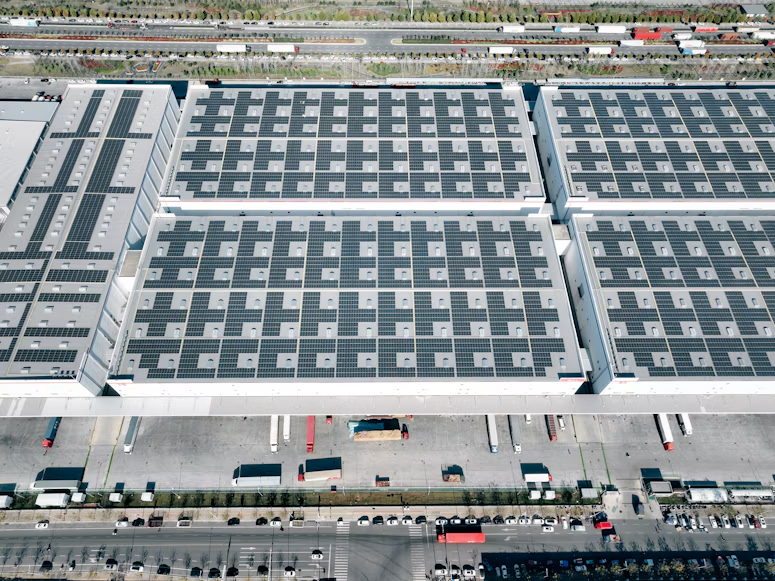
Bangladesh's factories and offices pay some of the highest daytime power rates in the country. That's exactly why the commercial and industrial rooftop solar solution in Bangladesh has grown fast in just a few years. Rooftop solar now sits above 1,000 MW nationwide. Most of that growth comes from factories, not homes. This guide covers how rooftop solar works for businesses. It also covers what it costs, and what the rules now ask for.
The term is simple once you break it down. Commercial and industrial, or C&I, rooftop solar means solar panels put on a business roof, not a home roof. A shop, office, or garment factory adds panels to cut its own power bill. The system also links to the grid through a step called net metering. Extra power made during the day goes to the grid. The business gets credit for it. At month's end, the bill only covers net power used.
This differs from two other setups worth knowing:
Utility scale solar. Big solar farms built to sell power to the grid, not for one building's own use.
Off-grid solar. Common in areas with no steady grid link at all.
The commercial and industrial rooftop solar solution in Bangladesh works well for a simple reason. Business power use lines up with sun hours. Offices, shops, and factories run heavy loads during the day. Lights, machines, and air conditioning all draw power then. That's exactly when the sun shines too. As a result, businesses use most of their solar power right away. Very little gets sent back to the grid for credit.
Rooftop solar in Bangladesh has grown fast, and the numbers back that up. As of mid-2026, state data put rooftop solar capacity at 418 MW. A study from IEEFA puts the real number closer to 667 MW. That's across 239 sites, once smaller unlisted systems get counted (source). Count even smaller rooftop systems, and total capacity may already sit near 1,000 MW nationwide. Separate state data puts total solar at over 1,500 MW. Rooftop systems make up more than a quarter of that figure.
Most of this growth is happening in industry, not homes. Building goes on mostly in Dhaka Division, and it's led by business roofs, not house roofs. The garment sector leads the charge. Garment factories face real push from buyers abroad to cut their carbon footprint. Rooftop solar is one of the fastest ways to show real progress.
A few forces are pushing this trend faster than ever:
Net metering is now a must in many cases. A late-2025 rule made rooftop solar a must for buildings with 1,000-plus square feet of roof space they can use. This kicks in whenever they ask for a new grid link. That rule runs for at least 20 years.
Rising grid rates make solar look better each year. Business rates now average over ৳10 per kWh. Rooftop solar power costs far less, often between ৳5.5 and ৳6.5 per unit.
Cheap loans have opened up. Bangladesh Bank's green loan plan and IDCOL both offer solar loans at 5 to 6 percent interest. That's well below most business loan rates.
Together, these three forces mean the case for going solar isn't just a green choice anymore. It's now a plain money choice for most mid-size and large firms.
This is usually the first thing business owners ask. The numbers have shifted in solar's favor over the past few years.
Grid rates for industrial users now run higher than solar costs almost everywhere in the country. Recent data shows a daytime grid rate of about $0.094 per kWh for industrial users. Solar power, by contrast, costs just $0.028 to $0.032 per kWh. That gap alone makes rooftop solar one of the cheapest ways to cut a factory's power bill.
Payback time shows this shift too. A well-built 1 MW rooftop system can make roughly 1,400 MWh per year in Bangladesh's climate. At current rates, that works out to a payback time of around six to seven years. More rate hikes, which have become common of late, would cut that time further. Smaller systems built for a specific load can pay back even faster. This holds most where roof space and load line up well.
None of these numbers count the added VAT savings. That's because solar power skips the 5 percent VAT that grid power carries on business bills. This adds a real, steady saving on top of the base rate gap.
Here's a simple way to picture it. A mid-size factory with a 500 kW load might add a 300 kW rooftop system. At current rates, that system could cut the factory's grid bill by a large share each month. The exact figure depends on how the load fits sun hours, but gains of 40 to 60 percent are common. Over a six-year payback span, the system keeps making free power for years. Panels are built to last 25 years or more.
Bangladesh's net metering rules changed a lot with the 2025 update. It's worth knowing the basics before you plan a system.
Every buyer type and power level falls under the new rules. This spans small home links up through big factory ones. For most business users, a few key limits matter most:
Three-phase links with a set load of 10 kW or more must add a net-metering system of at least 3 kW.
Factory and business users with a set load of up to 80 kW must add rooftop solar. That solar must equal at least 15 percent of total load.
New or bigger grid links for buildings with 1,000-plus square feet of roof space now need net-metered solar. This is a must for sign-off, for a term of at least 20 years.
In other words, rooftop solar isn't just an option anymore for a growing share of new links. Power firms should process net metering forms within 10 to 15 days, though delays still happen. A local installer who knows each firm's paperwork habits — DESCO, DPDC, or BPDB, depending on location — tends to save real time here.
The build steps for a business rooftop system move much faster than a big solar farm job, but they still follow clear steps.
An installer checks roof strength, shade, sun angle, and free space. As a rule of thumb, each 100 watts of solar panel needs roughly 0.6 to 0.7 square meters of roof space. So system size scales right along with free space. This step also checks the building's set load. That figure caps the max system size the rules allow.
The installer sizes the system to fit real load use, not just roof space. A factory that runs two or three shifts needs a different plan. An office that shuts at 6 p.m. needs a different one still. Getting this match right decides how much solar power gets used right away versus sent back for credit.
The business asks its local power firm for a net metering link. This step brings a technical check and sign-off before setup can start. It's worth starting early, rather than after gear shows up.
Panels, inverters, and mounts go up on the roof. Wiring and the link to the building's power system come next. For a typical system, setup usually takes a few weeks, not months. There's no big civil work involved.
Once it's up, the power firm checks and signs off on the system, then syncs it to the grid under net metering rules. From here, the business starts to see lower bills right away. No new gear or process shifts are needed on its end.
Rooftop systems need far less upkeep than most people expect. Mainly, this means routine cleaning and inverter checks. Since panels often carry 25-year output warranties, a well-built system should keep paying off for decades. It needs little upkeep along the way.
A few things trip up businesses again and again in rooftop solar jobs, and knowing them up front can save real cash.
The first slip is sizing the system to fit today's load, with no room for growth. A factory that grows two years later may find its rooftop system can no longer offset a big share of the new, bigger bill. Sizing with some room to grow, where roof space allows, usually pays off.
The second slip is skipping a real shade check. Even part shade on the array can hurt output for the whole string of panels. A nearby water tank or a taller building next door are common culprits. Checking this before the layout gets locked in, not after panels go up, is what a good installer does differently.
The third slip is going with the cheapest bid without checking the installer's net metering track record. A low price up front means little if the system sits in sign-off limbo for months. Papers not filed right the first time are usually the cause.
This question comes up often with the commercial and industrial rooftop solar solution in Bangladesh. The honest answer hangs on how often the area loses grid power. A standard grid-tied system shuts off on its own during an outage, for safety reasons. This happens unless it's paired with a battery and a hybrid inverter built for that job. For firms in areas with frequent outages, adding batteries can be worth the extra cost up front. It keeps key work running through outages, instead of just cutting the bill when the grid is up.
For firms without big outage worries, though, a standard grid-tied system with no batteries usually gives the fastest payback. That's because a battery adds real cost without changing daytime gains much.
A few real-world checks tend to split a smooth rooftop job from a rough one:
Is your roof sound enough for the panel load? Older buildings at times need reinforcement before setup, which adds to total cost.
Does your set load match what you want to add? Going over what net metering rules allow can delay sign-off.
Have you priced loan options? Green loan plans at 5 to 6 percent interest can shift the payback math a lot. Paying up front, by contrast, skips that shift.
Does your installer have real net metering track record with your specific power firm? DESCO, DPDC, and BPDB each have their own quirks in paperwork and time frames.
What happens during a power cut? If steady power matters as much as savings, battery backup needs to be part of the plan from day one. Don't add it later.
None of these are small points. They're the gap between a rooftop system that pays back in six years and one that stalls in sign-off limbo for months.
The path ahead is clear. Bangladesh's state wants 10,450 MW of new green power between 2026 and 2030, with rooftop solar set to supply 5,500 MW of that goal, more than half. For firms, that means the case for going solar now is stronger than ever. Falling gear costs, rising grid rates, and must-have rules for many new links all point the same way. So do cheap loans.
There's also a fresh incentive worth knowing about. Under a new program, businesses that install eligible rooftop solar with battery storage by February 2027 get paid ৳10.50 per kWh for surplus power sent to the grid, for three years. That's a stronger rate than standard net metering credit offers, and it's worth checking whether a planned project qualifies before that window closes.
The honest snag is that duty rules on some rooftop gear have gone up in recent years. This adds friction that trade groups still push to remove. Even so, the payback math holds up well for most mid-size and large business users today.
If you're weighing a commercial and industrial rooftop solar project in Bangladesh, from site check through net metering sign-off and setup, Gtech Infrastructure's commercial and industrial rooftop solar solutions cover the full process. That includes roof check, system design, utility paperwork, procurement, setup, and long-term upkeep. Every step is built around how Bangladesh's net metering rules and utilities actually work.
view more
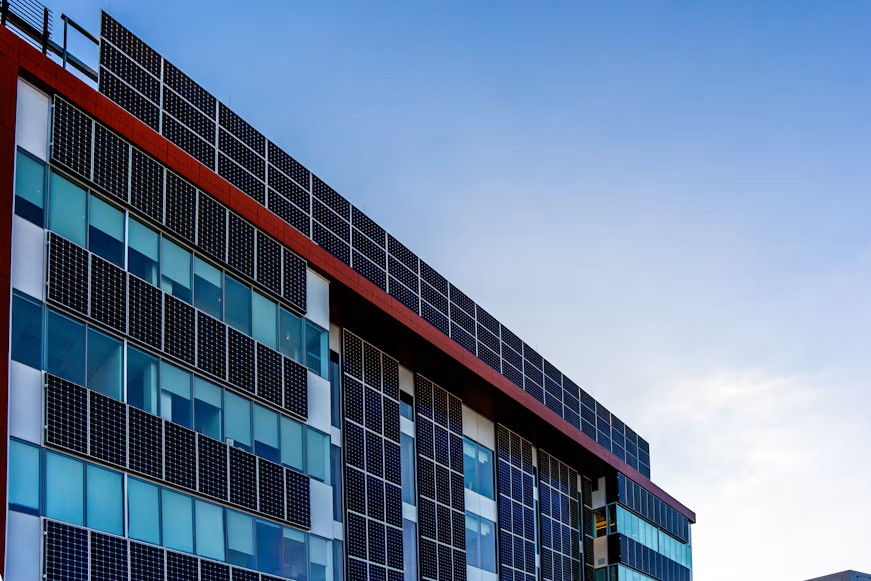
See how the BIPV solution in Bangladesh works, what it costs, and why architects and developers are starting to take notice.
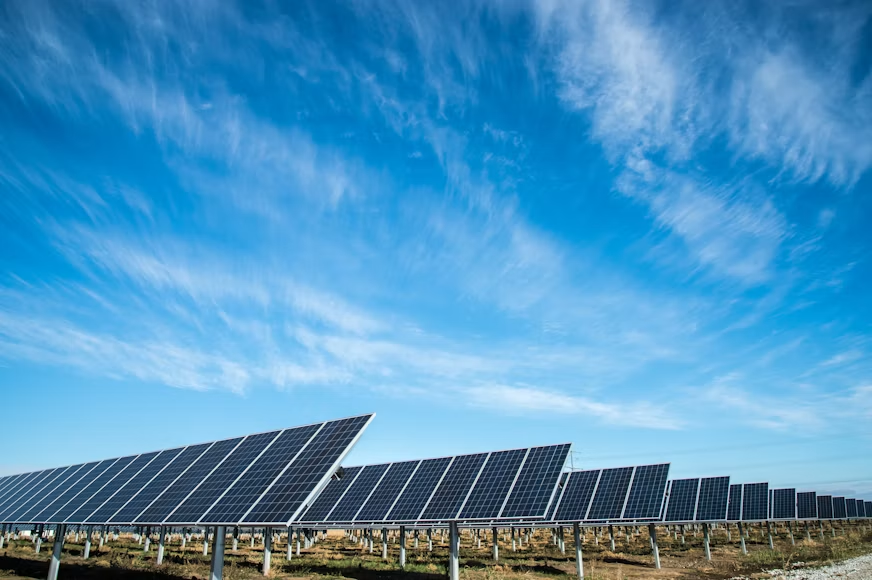
Looking for a solar EPC company in Bangladesh? See what EPC means, what to check, and why a solar EPC company in Dhaka often has the edge.
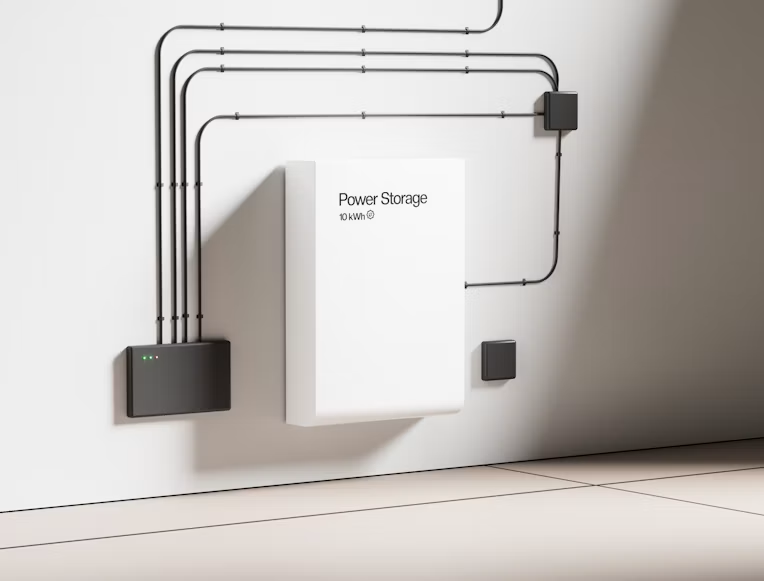
See how the battery energy storage solution in Bangladesh works, what it costs, and why factories are switching from diesel.

Need help choosing?
As land-use pressure increases across Europe, Agri-PV is becoming an increasingly relevant solution.


Rapid Response

Expert Guidance at Every Step

Support