
ENGINEERING INSIGHTS
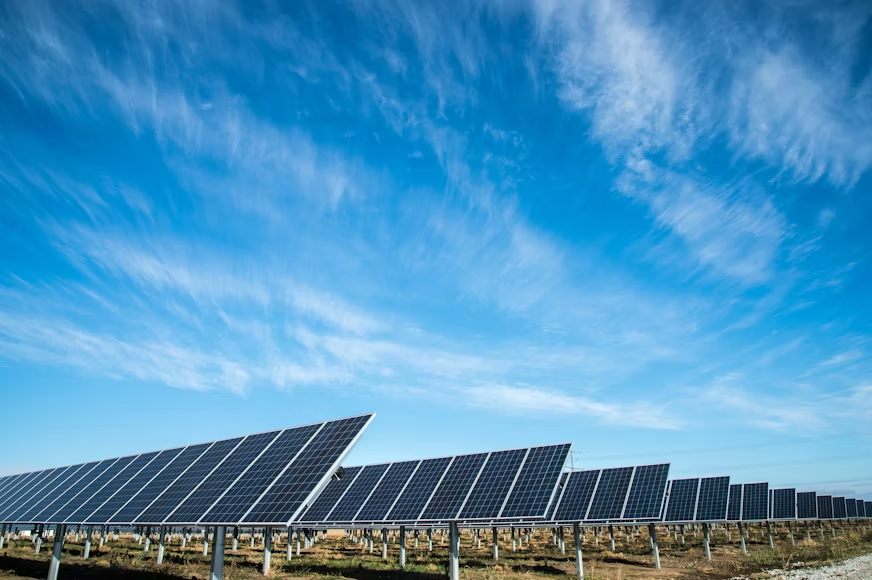
Bangladesh's solar market is growing fast. So is the list of firms that want to build your project. Picking the right solar EPC company in Bangladesh is now one of the biggest calls a factory owner, developer, or investor makes. It shapes cost, timeline, and system output for the next 25 years. This guide covers what EPC means and what sets a strong firm apart. It also covers why a solar EPC company in Dhaka often has a real edge over one based elsewhere.
EPC stands for Engineering, Procurement, and Construction. In plain terms, one firm handles the whole solar job, from first design to final switch-on. You don't juggle a designer, a parts seller, and a builder as three split deals. One team owns the outcome.
Each part of the term covers real work:
Engineering. This covers site checks, sun data, system layout, and the wiring plans that keep the system safe and efficient.
Procurement. This covers buying panels, inverters, mounts, and cable, plus all the small parts that hold a system together.
Construction. This covers site prep, panel mounting, wiring, grid tie-in, and the final tests before handover.
A solar EPC company in Bangladesh that does all three well gives you one point of contact. It also gives you one point of blame if things go wrong. That matters more than it sounds. Split contracts often lead to finger-pointing when a fault shows up after handover.
Bangladesh's solar market sits at roughly 1.57 GW in 2026. Forecasts put it near 2.79 GW by 2031. That growth is pulling in more firms, more contest, and more choice for buyers. But it also makes picking the right partner harder, not easier.
Panel prices have dropped sharply in the last two years. A glut of supply from Chinese makers drove that fall. Import prices for common panel types fell to roughly $0.10 to $0.12 per watt in 2024. That's down from $0.15 to $0.18 a year before. This drop makes solar cheaper to build than ever. But it also squeezes EPC firms on margin. A firm under real cost strain can cut corners on labor or on parts nobody checks closely. This is one more reason the choice of firm matters as much as the price quote.
BPDB issued several large solar tenders in 2026. This includes 495 MW across 10 sites in April, plus smaller rounds totaling well over 100 MW more. These tenders favor EPC firms that can pack land, permits, and funds together under BPDB's own rules. That rewards firms with real local track records over newcomers with none.
A 2025 fix let businesses net-meter up to 100 percent of their set load. That's up from a 70 percent cap before. This change has pushed more business and factory clients toward roof projects. It has also drawn a wave of new EPC firms into that space. Roof jobs are smaller and faster to finish than big solar farm ones, which makes that space an easy way in for newer firms.
Not every firm that calls itself an EPC company gives the same quality. A few things split the strong ones from the rest.
A proper EPC firm runs an actual site study. This covers sun exposure, shade, roof or land state, and grid access. A weak firm reuses a stock plan no matter the site. The gap shows up years later in lower output or early gear failure, not on day one.
Balance-of-system parts now make up 40 to 50 percent of total cost. That puts real strain on EPC margins. A firm with strong supplier ties can hold quality steady while still hitting a fair price. A firm without those ties either cuts quality or loses cash, and neither result is good for the client.
Grid tie-in, net metering forms, and BPDB or utility sign-off all take real local know-how. A solar EPC company in Dhaka often has a real edge here. It works near BPDB's head office and the utilities that serve the capital. This comes down to plain proximity and past dealings with the same offices.
The best firms don't vanish once the system switches on. Output checks, warranty aid, and routine upkeep all matter over a system's 25-year life. A firm's will to stay engaged after the bill is paid says a lot. It tells you how it'll act if something goes wrong down the line.
Bangladesh's solar EPC firms cluster heavily around Dhaka, and that's no accident. Dhaka is where BPDB, most big utilities, and most large factory and business clients sit. A solar EPC company in Dhaka tends to move faster on permits and site visits, simply through plain proximity. It also often has denser local supplier and subcontractor ties, built up over years of working the same market.
That doesn't rule out firms based elsewhere. Plenty of strong local players serve Chattogram, Sylhet, and other zones well. But for a Dhaka-based job, or one near greater Dhaka, a rooted local firm tends to cut real time off permits and site work.
A firm's claims are only worth as much as the work behind them. A few traits are worth checking for in any solar EPC company in Bangladesh, Gtech included, before you sign anything.
Look for a firm that runs its own in-house design team, rather than farming out every plan to a third party. In-house design usually means faster quotes and fewer errors between the design and build stages. Look too for a firm that owns its own crews. A firm that hands the whole build to whoever's free that month carries a hidden risk. Crew turnover is one of the biggest quality problems in solar construction.
Finally, ask how a firm handles the gap between signing and switch-on. A firm that gives you a single project manager as your one point of contact tends to catch problems earlier. That beats being passed between departments every time an issue comes up.
Not every EPC firm covers the full range of project types well, and it helps to know which segment you're actually shopping in.
Residential and small commercial. These are the fastest, simplest jobs. A home or small shop roof gets a system usually under 20 kW, with a short permit process. Many EPC firms specialize almost entirely in this segment, since the sales cycle is short and the technical bar is lower than larger work.
Commercial and industrial rooftop. This is where much of Bangladesh's current growth sits. Garment and textile factories, in particular, face pressure from buyers to cut emissions. These projects run from tens of kilowatts up to a few megawatts. They demand real load analysis, not a generic template, since a factory's power draw looks nothing like a home's.
Utility-scale ground-mount. These are the biggest jobs: tens to hundreds of megawatts, built to sell power into the national grid under a BPDB power purchase agreement. Very few firms in Bangladesh can handle a project at this scale. It demands land buying experience, grid tie-in skill, and the financial strength to carry a multi-year build.
A firm that claims to do all three equally well is worth a closer look. Strong firms usually have a clear focus, whether that's rooftop C&I work or big solar farm builds, even if they also take on smaller or larger jobs outside that core.
Pricing varies a lot by project type and size, but a few patterns hold across most of the market.
Utility-scale EPC prices have narrowed to roughly $600 to $800 per kilowatt as competition has grown fierce. Rooftop systems, by contrast, tend to run higher per kilowatt, often $1,000 to $1,200. Smaller jobs carry more labor and logistics cost per unit than large ones do. A quote well outside these ranges either way is worth asking about directly. It may point to a firm cutting corners, or one adding a margin the work doesn't justify.
Import duties and taxes also shape the final number. A 5 percent import duty on modules and 15 percent VAT on inverters remain in force for most project types. A transparent EPC firm shows these as separate line items rather than folding them invisibly into a lump sum.
A few direct questions tend to split firms worth hiring from ones worth skipping:
Can they show done projects of a like size and type to yours? A firm that's built ten roof systems for offices may not fit a large factory floor. The reverse holds too.
Do they hold real supplier ties, or do they buy on the spot market job by job? The first path usually means steadier quality and price.
What's covered after handover? Get the warranty terms, monitor setup, and upkeep schedule in writing before you sign, not after.
Do they have a track record with your specific utility? DESCO, DPDC, and BPDB each have their own paper habits. A firm that's dealt with yours before will move faster.
Is the quote broken down by item? A vague lump-sum number makes it hard to weigh bids fairly. It also makes it easy for a firm to hide a corner cut somewhere in the mix.
These questions matter more than the top-line price. A cheap quote from a firm that cuts corners on design or parts often costs more down the road. Lower output, early failures, or a system that never quite performs as sold all cost more than the up-front savings.
The Bangladesh solar EPC market is more crowded and more competitive than it's ever been. That's good news for buyers, but only if you know what to look for. Falling gear costs and bigger tenders have brought in serious players and quick-buck ones alike. The gap between them shows up in the details. Real design work, real supplier ties, a real path through local permits, and real support after the system goes live all separate the two.
For projects in or near the capital, a solar EPC company in Dhaka carries a real edge in speed and local know-how. The basics above still matter everywhere in the country, though.
If you're weighing a solar EPC company in Bangladesh for a rooftop, business, factory, or big solar farm project, Gtech Infrastructure covers the full EPC job. This runs from first site study through construction, commissioning, and long-term support, built around how permits, utilities, and financing actually work in this market.
view more
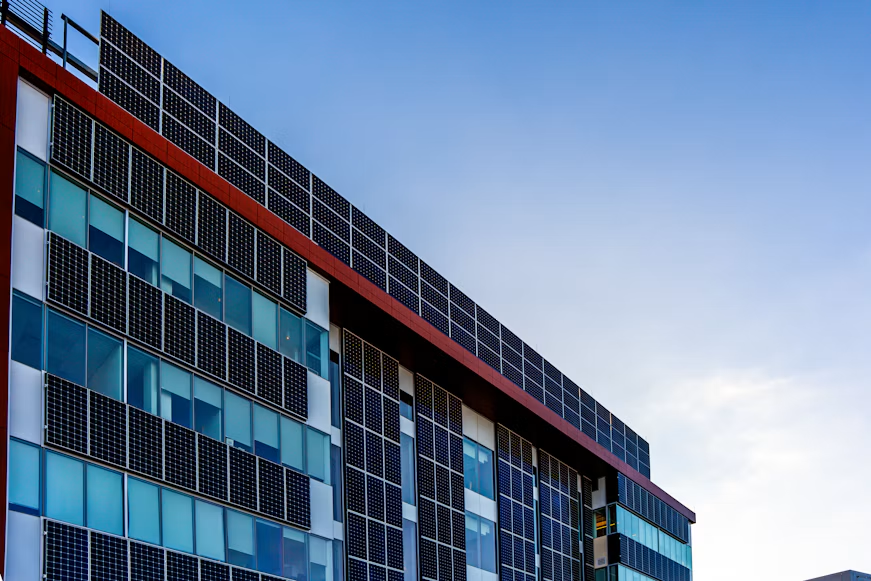
See how the BIPV solution in Bangladesh works, what it costs, and why architects and developers are starting to take notice.
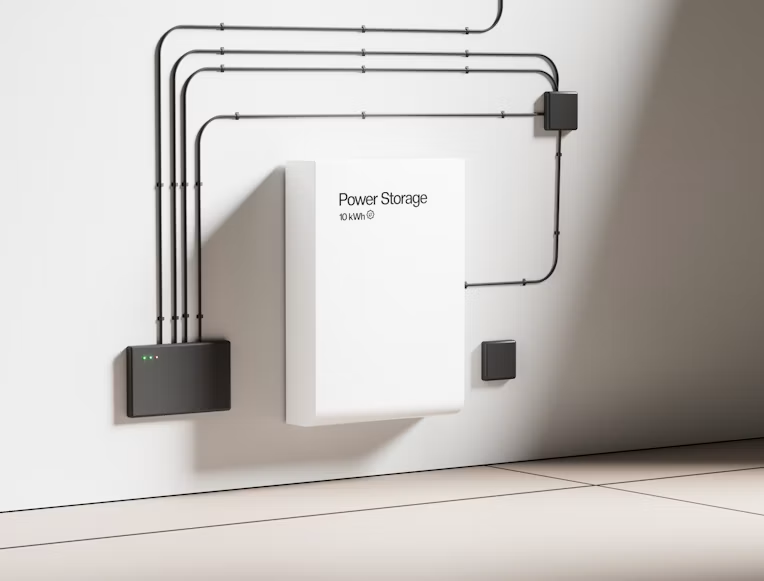
See how the battery energy storage solution in Bangladesh works, what it costs, and why factories are switching from diesel.
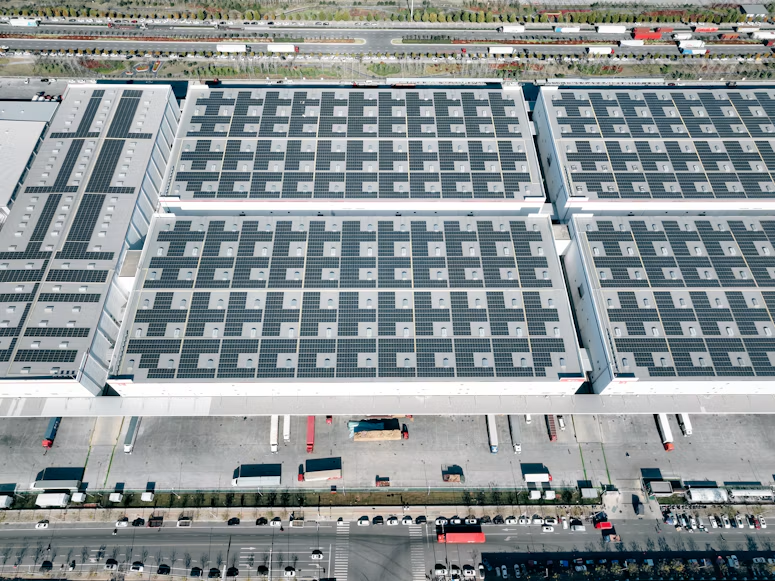
See how the commercial and industrial rooftop solar solution in Bangladesh works, what it costs, and how fast it pays back.

Need help choosing?
As land-use pressure increases across Europe, Agri-PV is becoming an increasingly relevant solution.


Rapid Response

Expert Guidance at Every Step

Support