
ENGINEERING INSIGHTS
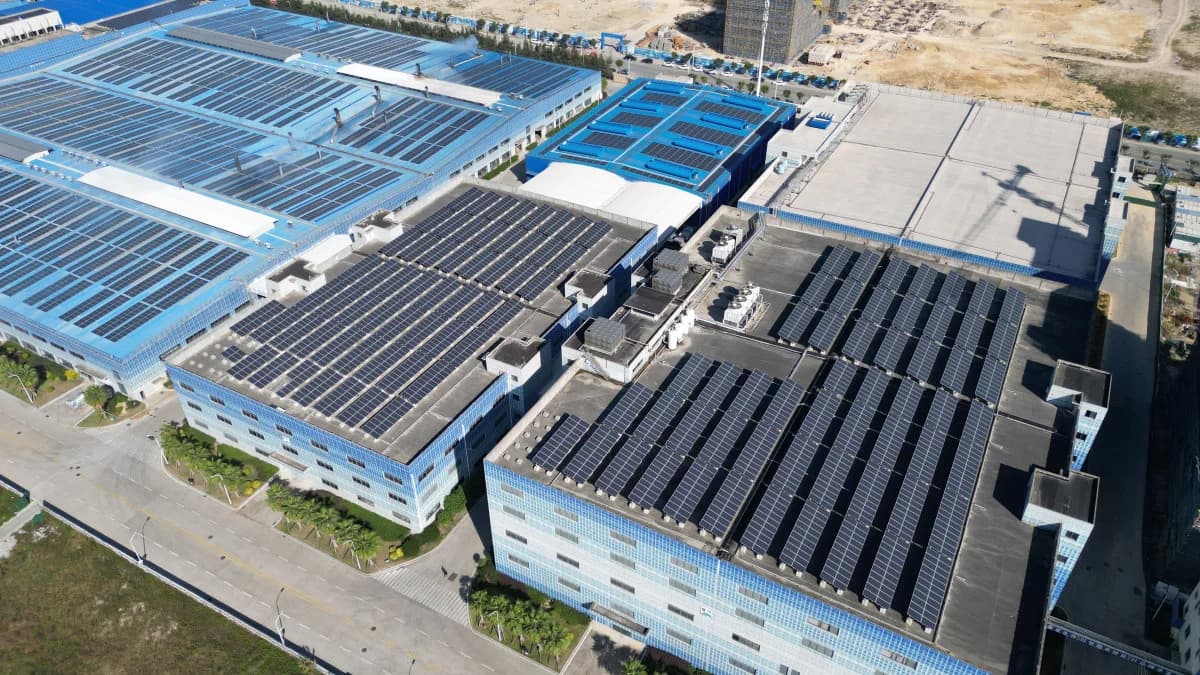
A plant roof earns nothing while it sits empty. This commercial rooftop solar installation guide for businesses in Bangladesh shows how to turn that roof into a power plant. It covers the savings, the rules, the steps, and the mistakes that cost owners months. So read it before you ask for your first quote.
First, the numbers explain the rush. Industrial buyers pay about $0.094 per kWh for daytime grid power if their approved load is up to 5 MW. In contrast, rooftop solar costs only $0.028 to $0.032 per kWh to produce. IEEFA puts the possible saving for industry at $0.061 per kWh (source).
So the market is moving. In fact, IEEFA found 667 MW of rooftop solar across 239 sites. Also, state data showed 418 MW in June 2026. Smaller units under 150 kW were left out of the count, so the true total may reach 1 GW.
Also, most of that capacity sits on plant roofs. Garment makers, for instance, lead the way. Their foreign buyers want lower emissions, so a rooftop plant is the fastest proof.
A rooftop plant has five main parts:
Panels. They turn sunlight into DC power.
Inverters. They convert DC to the AC your machines use.
Mounting structure. It holds the panels on your roof.
Cables and protection. These carry power with care and cut it off during faults.
Meter and tracking. They record what you make, use, and export.
Most business systems are grid-tied, which means they work alongside the grid. They work with the grid, not instead of it. For one, on a sunny day, your plant draws solar power first. Then the grid fills the gap.
Extra power then goes back to the grid under net metering. In return, the power firm credits you for it. At month end, therefore, you pay only for the net amount.
The price of a commercial rooftop solar installation moves with panel supply, duties, and the exchange rate. So ask for a written quote with each item listed. Then test it against a simple savings model.
Here is the model. First, a good system in Bangladesh makes about 1,400 kWh per kW each year. Second, each kW needs about 6.5 square metres of usable roof. At IEEFA's $0.061 saving per kWh, the yearly gains look like this:
| System size | Roof area needed | Yearly output |
Estimated yearly saving |
| 100 kW |
650 m² |
140,000 kWh |
$8,540 |
| 250 kW | 1,625 m² | 350,000 kWh |
$21,350 |
| 500 kW | 3,250 m² | 700,000 kWh |
$42,700 |
| 1,000 kW | 6,500 m² | 1,400,000 kWh |
$85,400 |
Of course, these are estimates, not promises. Your real saving depends on shade, dust, roof angle, and when your plant uses power. Still, the table gives you a fast check. To check a quote, divide your quoted price by the yearly saving. The answer is your rough payback in years.
Cost is not only about panels. For instance, IEEFA notes that duty on industrial projects rose from 1 percent to 17 percent. So a quote from last year may be out of date. So ask each bidder to show duties and VAT on separate lines.
One new offer is worth knowing about. In September 2026, for one, the Power Division announced a package for rooftop systems with batteries. The power firm pays Tk 10.50 per kWh for surplus power you export (source).
Here are the terms.
Battery needed. The system must include battery storage.
Deadline. You must install by 28 February 2027.
Length. The rate runs for three years, to 28 February 2030.
Payment. Power firms pay every three months into your bank account.
For any commercial rooftop solar installation in Bangladesh, timing now matters. The state wants at least 5 GW of net-metered solar by next summer. As a result, the window is short. If you plan a system with batteries, start the design now.
But batteries add cost. They make sense when you lose grid power often or export a lot at midday. For a plant with steady daytime use, a plain grid-tied system may still pay back faster. So run both cases before you decide.
This commercial rooftop solar installation guide for businesses in Bangladesh breaks the job into six steps.
First, an engineer visits. They check roof strength, age, shade, and free space, too. They also read your power bills. These show when you use power and your approved load.
Old roofs often need repairs first, so plan for that. Fix leaks before panels go on, because lifting panels later costs far more.
Next, the designer sizes the commercial rooftop solar installation to your load, not just your roof. A plant with three shifts needs a different plan from an office that closes at 6 p.m. The goal is simple: use as much solar power on site as you can.
Leave room to grow, because if you expand in two years, a tight design will cap your savings.
Then come the forms for your commercial rooftop solar installation. First, you apply to your power distributor, such as DESCO, DPDC, or BPDB. After that, they check the design and approve the grid link.
The Net Metering Guidelines 2025 now govern this step. Rules and forms change, so ask your contractor to confirm the current requirements. Start the application early, because late filings delay switch-on.
Next, panels, inverters, and structures arrive on site. Also check the brands, datasheets, and warranties against your contract. Cheap parts that fail in year three erase any early saving.
Then, for a commercial rooftop solar installation, crews fix the mounts and lay the panels. They run cables and connect the inverters. Because work at height is risky, crews need proper safety gear and trained staff. A reliable contractor will show you its safety plan before work starts.
As a rule, most firm roofs take weeks, not months. Your production does not need to stop.
Finally, the power firm inspects the system and links it to the grid. After that, a tracking screen shows output day by day. Also compare it with the design figure each month. A drop often means dirt, shade, or a faulty string.
Planning helps more than hurry. Here is a realistic path for a mid-size plant commercial rooftop solar installation, based on common practice. Your dates will differ.
Weeks 1 to 2. Roof survey, bill review, and a first layout.
Weeks 3 to 4. Final design, quote, and contract.
Weeks 5 to 6. Net metering application and gear orders.
Weeks 7 to 12. Delivery, mounting, wiring, and testing.
Week 13 on. Utility inspection, grid link, and first bills.
Delays often come from forms or late gear, not from the build itself. So file early and track each order. If the battery incentive matters to you, count back from 28 February 2027 and leave a safety margin.
But not every roof suits a commercial rooftop solar installation the same way. The roof type sets the mounting method, the cost, and the risk.
Concrete (RCC) roofs. These are common on offices, malls, and many factories. For one, contractors use ballast blocks or anchor bolts. Anchors are firmer, but they pierce the waterproof layer. So the crew must seal each hole properly.
Metal sheet roofs. Most garment sheds have these. Panels clamp to the ribs, so there is little extra weight. But old or rusty sheets can fail under clamps. So check sheet thickness and fixings before you sign.
Roofs with skylights and vents. These cut usable space. They also cast shade. Plan the layout around them, and keep clear walkways for cleaning crews.
In all cases, ask for a structural note from a qualified engineer. A commercial rooftop solar installation adds weight, and wind lifts panels hard during cyclone season. So never accept "it will be fine" as an answer.
Most problems repeat, so watch for these four.
Sizing for today only. Plan for growth, since a small system on a big roof wastes space you already own.
Ignoring shade. A water tank or a tall neighbour can cut the output of a whole string. So test shade before you fix the layout.
Picking the lowest bid. Cheap quotes often hide weak parts or thin support. Instead, ask what happens in year five.
Skipping the grid firm's habits. Each distributor has its own way with forms. An contractor with past approvals at your power firm will save you weeks.
Safety deserves its own line in the contract for any commercial rooftop solar installation. First, good crews use fall protection and lock out live circuits. Also, they route cables away from sharp edges and heat. Ask where the shutoff switches sit, so firefighters can find them fast.
Upkeep is light, but it is not zero. Bangladesh has dust, rain, and bird droppings. As a result, panels need regular washing, and the schedule depends on your area. Inverters also need checks, because heat shortens their life.
Set up a simple routine:
Wash panels on a fixed schedule, early in the morning.
Check the tracking screen weekly.
Inspect cables and clamps twice a year.
Keep the warranty papers and test reports in one folder.
Rooftop solar panels often carry 25-year output warranties. But inverters often carry shorter ones. So budget for an inverter swap somewhere in the plant's life.
Cash is not the only way to fund a commercial rooftop solar installation. For one, many businesses use a green loan or a development-bank line to spread the cost. Rates and terms change, so ask your bank for today's offer. Then compare the loan cost with your yearly saving.
Some contractors also offer lease or pay-as-you-go deals. These cut the upfront bill. In return, though, you share the savings for years. So read those contracts closely. Look at the term, the price per kWh, and what happens if you sell or move the building.
Whichever route you pick, keep one rule in mind. The monthly saving should cover the monthly payment, with room to spare.
Good questions sort strong rooftop solar installation firms from weak ones. Put these on your list.
Can you show finished projects of my size and roof type?
Who handles net metering, and how many approvals have you won at my power firm?
Which brands do you use, and what are the warranty terms?
How do you check roof strength and fire safety?
What support do I get after handover?
Also ask for a written scope, a payment schedule tied to milestones, and a tracking plan. A firm that answers these clearly has done the work before.
Run a quick test. You are a good fit if most of these are true:
Your plant or office runs mostly in daylight.
Your roof is sound and has open space.
Your power bill is a big share of costs.
You can sign a contract for 20 years or more of use.
If you tick three or more, ask for a design now. Otherwise, fix the roof or the load pattern first. A good contractor will tell you the truth, even when it means a smaller job.
Overall, the direction is clear. The state wants 10,450 MW of new renewable power between 2026 and 2030. It hopes rooftops supply a large share. Also, falling panel costs and high grid tariffs push the same way.
Duty changes and policy shifts will keep moving the numbers, though. So treat any quote as a snapshot. So review it against the latest rules before you sign.
Use this commercial rooftop solar installation guide for businesses in Bangladesh as your checklist. If you want a site check and a clear plan, Gtech Infrastructure's commercial and industrial rooftop solar solutions cover the full job. That runs from roof checks and design to net metering, installation, and upkeep.
view more
Utility scale solar power plant installation in Bangladesh
How to calculate the ROI of commercial rooftop solar in Bangladesh
Grid tied vs off grid solar systems in Bangladesh: which is better?

Need help choosing?
As land-use pressure increases across Europe, Agri-PV is becoming an increasingly relevant solution.


Rapid Response

Expert Guidance at Every Step

Support