
ENGINEERING INSIGHTS
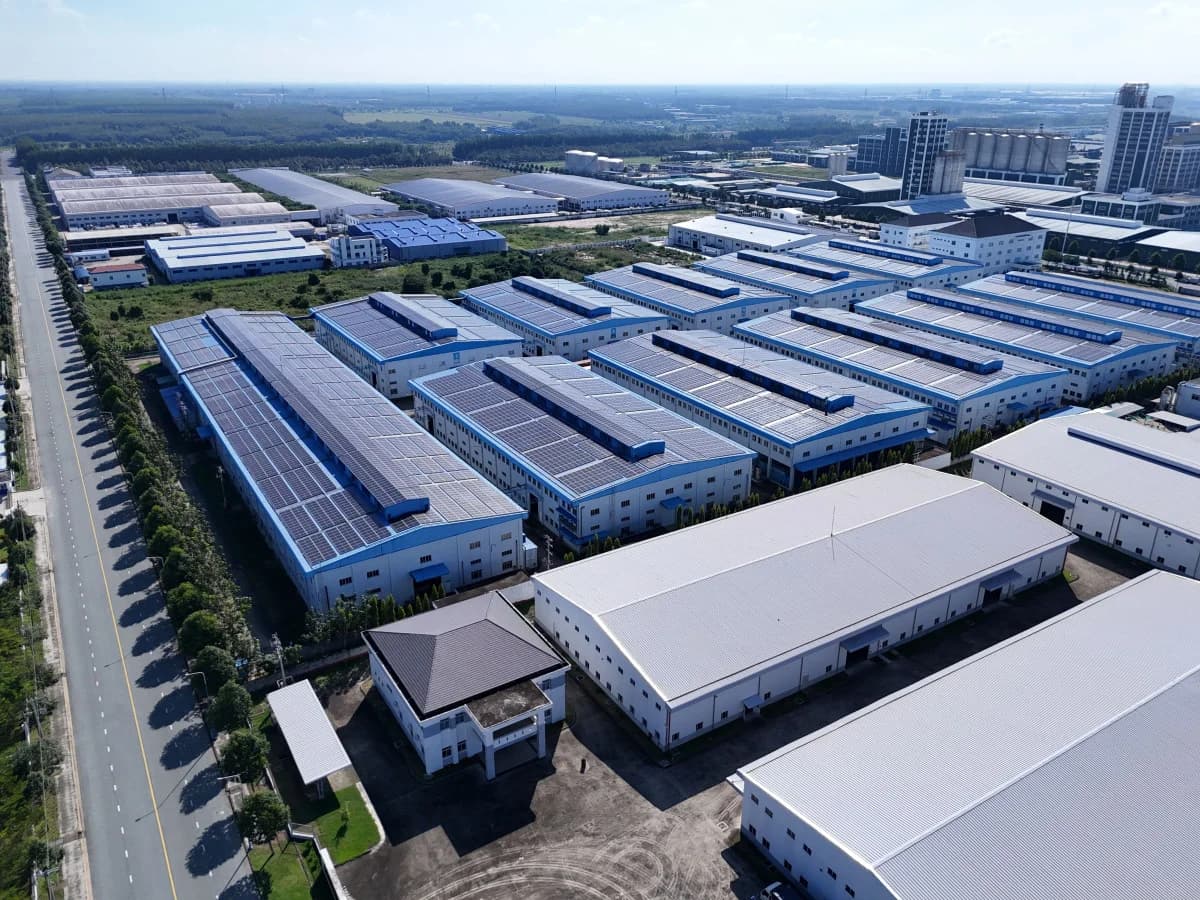
A solar quote means little until you test it. This guide shows how to calculate the ROI of commercial rooftop solar in Bangladesh with your own bills. All you need is six numbers and a calculator. By the end, you will know your payback time, your 10-year and 25-year return, and the risks that can move them.
ROI stands for return on investment. It answers one simple question: how much do you gain for each taka you put in?
Owners use three related measures, and each tells a different story.
Payback period. The years until savings repay the cost.
ROI. Total gain over a set span, as a share of the cost.
IRR. The yearly return rate, which you can compare with a bank loan or a new machine.
You do not need all three. Still, the payback period is the quickest check, and IRR is the fairest. So the steps below build up to both.
First, gather these to calculate the ROI of commercial rooftop solar. A good contractor will help, but you should own the numbers.
System cost. The full price, with duties, VAT, roof repairs, and grid fees.
Yearly output. How many kWh the plant will make.
Power rate you avoid. The price per kWh you now pay for daytime grid power.
Running costs. Cleaning, checks, and insurance.
Lifespan. Panels often carry 25-year output warranties.
Funding plan. Cash, loan, or lease.
Notice, too, that two of these, output and rate, come straight from facts you can check. So pull 12 months of power bills. These bills show your daytime use and what you pay.
Follow these seven steps in order. Then a worked example follows.
First, a well-built plant in Bangladesh makes about 1,400 kWh per kW each year. So a 1 MW plant makes about 1.4 million kWh. However, shade, dust, and roof angle can lower that figure. So ask your contractor for a written output estimate based on your roof, not a generic number.
Your saving per unit is the grid rate you avoid, minus what the solar unit costs you to make. For instance, IEEFA puts the daytime grid rate for industrial users at about $0.094 per kWh. It puts solar at only $0.028 to $0.032 per kWh to produce, which leaves a possible saving of about $0.061 per kWh (source). Your own tariff may differ, so use your bills.
Next, multiply output by the saving per unit. That gives your yearly gain before running costs.
Solar is low-upkeep, but it is not free. For example, washing, cable checks, tracking, and insurance all cost money. For planning, a common rule is about 1 percent of the system cost per year. Treat that as an assumption and replace it with your contractor's quote.
The formula is simple:
Payback (years) = system cost ÷ (yearly saving − yearly running cost)
ROI = (total net savings over the span − system cost) ÷ system cost
Use 10 years for a quick view, and 25 years for the full life.
IRR is the discount rate that makes the net value of all cash flows equal zero. NPV is the value of those flows in today's money. A spreadsheet handles both. So use the functions IRR and NPV. Then compare IRR with your loan rate. If IRR is higher, then the plant earns more than it costs to fund.
First, let us use real market figures. RANCON's chief operating officer told bdnews24 that a 1 MW rooftop plant costs Tk 35 million to Tk 45 million. He also said it makes 100,000 to 120,000 units a month, and saves Tk 600,000 to Tk 700,000 a month (source). Here we take the middle of each range.
| Input | Value |
| System cost | Tk 40 million |
| Output | 1.32 million kWh a year (110,000 a month) |
| Saving | Tk 650,000 a month, or Tk 7.8 million a year |
| Running cost (assumed 1% of cost) | Tk 0.4 million a year |
| Net saving in year 1 | Tk 7.4 million |
Now apply the formulas.
Payback: 40 ÷ 7.4 = about 5.4 years.
10-year ROI: about 81 percent, after panel wear.
25-year ROI: about 326 percent.
IRR: about 17.5 percent a year.
NPV at a 10 percent discount rate: about Tk 23.6 million.
For these results, I made three more assumptions, because no quote covers them. First, output drops 0.5 percent a year as panels age. Second, an inverter swap in year 12 costs 8 percent of the system price. Third, grid tariffs stay flat, which is cautious, since they have risen.
So, at a 17.5 percent IRR, the plant beats most business loan rates. It also repays its cost in about six calendar years. After that, it adds savings for another 19 years.
Not every owner has a megawatt roof, so here is the same method for a 100 kW plant. The inputs are scaled from the 1 MW case, so treat the result as a rough guide.
Output: 100 kW × 1,400 kWh = 140,000 kWh a year.
Value per unit: Tk 7.8 million ÷ 1.32 million kWh gives about Tk 5.9 per unit saved.
Yearly saving: 140,000 × 5.9 = about Tk 0.83 million.
Cost (assumed Tk 40,000 per kW): Tk 4 million. Small plants often cost more per kW, so ask for a real quote.
Running cost (1%): Tk 0.04 million.
Payback: 4.0 ÷ (0.83 − 0.04) = about 5.1 years.
The method stays the same at any size, but only the inputs change. Only the inputs change. In fact, a smaller plant may pay back faster if it matches your daytime load well, because then you use every unit on site.
No quote is exact, so test the range. This table shows payback in years, with a 1 percent running cost:
| System cost | Saving Tk 600k a month | Saving Tk 650k a month | Saving Tk 700k a month |
| Tk 35 million | 5.1 | 4.7 | 4.4 |
| Tk 40 million | 5.9 | 5.4 | 5.0 |
| Tk 45 million | 6.7 | 6.1 | 5.7 |
The spread is useful. Even in the worst corner, payback stays under seven years. In the best case, however, it nears four and a half. The same range echoes what RANCON quoted: 4.5 to 5.5 years with direct funding.
The load pattern also shapes the return. A plant pays most when you use its power as it is made.
Garment and textile plants. These run by day, often in several shifts, so most solar units are used on site. Buyers abroad also push for lower emissions, which adds value beyond the bill.
Cold storage and food plants. Cooling loads run day and night. Daytime use is high, so payback is good, but night loads still need grid power or a battery.
Offices and malls. Air conditioning peaks at midday, which suits solar. Weekends are weaker, because the load drops while the sun still shines. Check your Friday and Saturday use before you size the plant.
Warehouses and schools. These have low daytime load or long breaks. So export matters more, and net metering credit becomes a bigger part of the return.
However, cash and loans give different answers. RANCON's figures show payback of 4.5 to 5.5 years with direct funding, and 7 to 9 years with bank interest. So interest adds roughly two to four years.
To test a loan, first add the interest to the cost. Then check one thing: does the monthly saving cover the monthly loan payment? If yes, then the plant pays for itself from day one. If no, then resize the plant or lengthen the loan.
By contrast, lease and pay-as-you-go deals work differently. You pay little or nothing upfront, but you share savings for years. Then compare the price per kWh you pay under the deal with your current grid rate. Also, check what happens if you sell the building.
You do not need special software. Instead, open a spreadsheet and build one row per year, from year 0 to year 25.
A holds the year.
B shows output, starting at the first-year figure and falling 0.5 percent a year.
C gives the saving, which is output times the value per unit.
D lists running costs, plus any inverter swap.
E is net cash flow, which is C minus D. Year 0 is the system cost as a negative number.
F keeps a running total, to spot the payback year.
Then use the IRR function on column E, and the NPV function with your chosen discount rate. Finally, copy the sheet twice for the low and high cases. This takes about an hour, yet it can save you millions.
Many ROI sheets look neat and still miss real costs. So add these lines:
Duties and VAT. IEEFA notes that duty on industrial projects rose from 1 percent to 17 percent. Cost quotes must show it.
Roof repairs. An old roof may need repairs before panels go on.
Inverter replacement. Inverters often last less than panels, so budget for a swap.
Panel wear. Output slips a little each year.
Grid fees and forms. Net metering approval can add time and cost.
Downtime. Poor design can cost output for weeks.
On the other side, add the upside you may have missed. Grid power on business bills carries 5 percent VAT (check yours), so each unit you do not buy also saves that VAT. Rate rises also raise your saving. Meanwhile, a solar unit stays at a fixed cost.
Possibly, but test it. For one, the government now offers Tk 10.50 per unit for surplus power sent to the grid by rooftop systems with batteries. Systems must be installed by 28 February 2027, and the rate runs to 28 February 2030.
For a plant that exports a lot, this can raise income. However, for a plant that uses nearly all its power on site, it adds little. Batteries also add cost and need replacing later. So build two cases: one without batteries, one with. Then compare the IRR of each.
Four slips distort the answer most.
First, owners use the wrong tariff. So use your actual daytime rate, not an average. Second, they assume every unit is used on site. Also, some power may export at a lower credit. Third, they ignore the cost of money. A saving next year is worth less than a saving today. Finally, they forget the inverter swap.
A good ROI sheet is honest about all four. It also shows a low case, a middle case, and a high case. That way, you see the risk before you sign.
Run through this list before you sign.
Do I have 12 months of power bills?
Is the output estimate written, and based on my roof?
Does the quote list duties, VAT, and grid fees?
Did I add running costs and an inverter swap?
Have I tested a low, middle, and high case?
Did I compare IRR with my loan rate?
Does the battery case beat the no-battery case?
If you answer yes to all seven, then your numbers are solid.
In short, a good result has three signs. First, payback is under six or seven years. Second, IRR beats your cost of funds by a clear margin. Third, the case still works in the low scenario.
If your sheet fails any of these, do not walk away yet. Instead, try a smaller plant, a better roof section, or a different funding plan. Often, a small change fixes the case.
Need help with your own numbers? Gtech Infrastructure's commercial and industrial rooftop solar solutions include site checks and sized quotes, so you can test the ROI before you commit.
view more
Utility scale solar power plant installation in Bangladesh
Grid tied vs off grid solar systems in Bangladesh: which is better?
Commercial rooftop solar installation guide for businesses in Bangladesh

Need help choosing?
As land-use pressure increases across Europe, Agri-PV is becoming an increasingly relevant solution.


Rapid Response

Expert Guidance at Every Step

Support